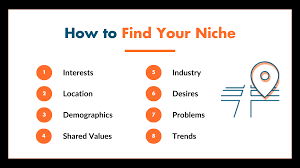
Finding a niche to start something new can feel like searching for a hidden treasure. You know there’s something valuable out there. But where do you begin? It’s a common feeling for many. This guide will walk you through the steps. We’ll help you uncover that perfect spot. You’ll learn how to spot opportunities. We’ll also show you how to pick one that fits you.
Finding a niche means choosing a specific, underserved part of a bigger market. It helps you stand out. It lets you focus your efforts. This guide offers clear steps to find your unique business space. It combines passion, market need, and profitability.
What Is a Niche and Why Does It Matter?
A niche is like a small, cozy corner within a large room. It’s a specialized area of a market. Think of the whole market as a big restaurant. A niche would be the specific type of cuisine they offer, like “vegan Italian desserts.” Or maybe it’s the way they serve it, like “fast, healthy lunches for busy office workers.”
Why is this important? Big markets are crowded. It’s hard for a new business to get noticed. A niche helps you become the “go-to” person. You become an expert in that small area. This makes it easier to attract the right customers. They are looking for exactly what you offer.
Think about it: If you sell “shoes,” that’s huge. But if you sell “waterproof hiking boots for people with wide feet,” that’s a niche. People searching for that specific need will find you. They won’t get lost in a sea of general shoe stores.
My Own Niche-Finding Journey
I remember when I first wanted to start a blog. I loved writing about so many things. Home decor, healthy recipes, travel tips, productivity hacks. I thought, “I’ll just write about everything!” So I did. My blog became a confusing mess. No one knew what it was about. My audience was scattered. I felt like I was shouting into a void.
One day, a mentor told me, “You can’t be everything to everyone.” That hit hard. I felt a bit lost. Then, I looked at what I enjoyed writing about the most. What did people ask me for advice on? They always asked about organizing their homes on a budget. They loved my quick, simple cleaning tips.
That was it. My niche! I started focusing on that. My blog got clearer. My writing felt more focused. People started finding me because I was talking directly to them. They had that exact problem. It was a huge relief. It taught me that finding a niche wasn’t about limiting myself. It was about focusing my energy for better results.
Understanding Your Passions and Skills
The best niches often come from things you genuinely love. What do you enjoy doing in your free time? What do you find yourself talking about a lot? What problems do you love solving for yourself or others? These are clues.
Think about your hobbies. Are you great at knitting? Maybe you can sell custom knit hats. Do you love fixing old furniture? That could be a niche. Do you excel at planning events? A niche in wedding planning for small, intimate gatherings might work.
Your skills are also key. What are you good at? Are you a natural organizer? Do you have a knack for clear explanations? Are you tech-savvy? Combine your passions with your skills. This creates a strong foundation.
Let’s say you love baking. That’s a passion. You also have great attention to detail. That’s a skill. Maybe your niche is “custom celebration cakes for children’s birthdays.” You can focus on unique designs and flavors kids love.
What If My Passions Don’t Seem Profitable?
This is a common worry. Sometimes our favorite hobbies don’t immediately scream “money-maker.” But often, there’s a way to connect them to a market need. For example, maybe you love collecting vintage stamps. That’s a niche hobby. You could then offer a service for “appraising and organizing rare stamp collections for collectors.”
It’s about looking for the hidden demand. What problems do people have within that hobby or interest? What services or products are missing?
Exploring Market Needs and Demand
Once you have a few ideas based on your passions, you need to check if people actually want them. This is where market research comes in. You don’t need to be a pro researcher. Simple steps can give you a lot of information.
Talk to people. Ask friends and family. If you think about selling handmade soaps, ask people if they buy artisanal soaps. What kind do they like? How much do they pay?
Look online. Use search engines like Google. Type in phrases related to your niche idea. See what comes up. Are there many results? Are they from established businesses? Or are they small blogs and forums?
Check social media. Are there groups or communities discussing your topic? What questions are people asking? What complaints do they have? This shows you what problems they face.
Consider keyword research tools. Tools like Google Keyword Planner can show you how many people search for certain terms. If many people are searching for “organic baby food delivery,” that’s a strong signal of demand.
Looking for Gaps
A great niche often has a gap. This means there’s a need, but few businesses are meeting it well. You want to find a spot where customers are saying, “I wish someone would just.” or “It’s so hard to find.”
For example, imagine many people need help with pet grooming at home. But most services are expensive or require a trip to a salon. A niche could be “mobile pet grooming services for busy pet owners” or “DIY pet grooming kits with video tutorials.”
Identifying Your Ideal Customer
Who are you serving? Knowing your ideal customer is crucial. It shapes everything from your product to your marketing.
Think about their age, location, income, and interests. What are their challenges? What are their dreams? What do they value?
If your niche is eco-friendly cleaning products, your ideal customer might be environmentally conscious parents. They care about their family’s health. They want products that are safe and effective. They might live in suburban areas.
Once you know who they are, you can tailor your offerings. You can speak their language. You can show them you understand their needs. This builds a strong connection. Customers are more loyal when they feel understood.
Analyzing the Competition
Don’t be afraid of competition. Some competition is a good sign! It means there’s a market. The key is to see how you can be different.
Look at businesses already in your potential niche. What are they doing well? What are they missing? Read their customer reviews. What do people praise? What do they complain about?
Are there many big companies? Or are there mostly small businesses and freelancers? If there are many big players, you might need to find a very specific sub-niche. If there are few, it could be a great opportunity.
You want to find a space where you can offer something unique. Maybe it’s better quality, lower price, faster service, or a more personal touch. Your unique selling proposition (USP) is what makes you stand out.
The “Blue Ocean” Strategy
Some people talk about finding a “blue ocean.” This means creating a new market space. Or making demand uncontested. It’s about making competition irrelevant. This is often achieved by offering something truly novel. Or by combining existing elements in a new way.
For instance, Cirque du Soleil didn’t just do a better circus. They blended circus arts with theater. They appealed to a new audience that wouldn’t normally go to a traditional circus. They created their own blue ocean.
Testing Your Niche Ideas
Before you invest a lot of time and money, test your ideas. This can be simple.
Create a landing page for your proposed service or product. Use social media ads to drive traffic to it. See how many people sign up for more information or pre-order. This tells you if there’s real interest.
Offer a limited version of your product or service. For example, if you want to offer custom meal plans, create a few sample plans. Offer them to a small group for a discount. Get their feedback.
Talk to potential customers directly. Have honest conversations. Ask them if they would pay for what you’re offering. How much? When would they use it?
This testing phase is crucial. It saves you from building something nobody wants. It helps you refine your idea based on real feedback.
Key Elements of a Good Niche
So, what makes a niche a good one?
1. Sufficient Demand
There must be enough people who want what you offer. If only three people in the entire world need your product, it’s not a viable niche.
2. Profitability
People must be willing and able to pay for your solution. Look for niches where customers have disposable income. Or where the problem is significant enough that they’ll invest in a solution.
3. Low Enough Competition (or a Way to Differentiate)
You don’t want to jump into a market completely dominated by giants. Find a way to be unique. Or focus on a smaller segment that the big players ignore.
4. Passion and Interest
You need to care about the niche. You’ll be spending a lot of time on it. If you’re bored, you won’t stick with it. Your genuine interest will also shine through to your customers.
5. Longevity
Is this a passing trend? Or something people will need for a long time? Aim for niches that have staying power. Think about long-term needs.
Common Niche Categories to Consider
Here are some broad categories where you can often find specific niches:
Health and Wellness
This is huge. Think beyond general fitness. Consider:
Specific diets (keto for seniors, vegan athletes)
Mental health support (anxiety relief for students, mindfulness for busy moms)
Specialized fitness (post-natal yoga, adaptive sports training)
Holistic remedies
Sleep solutions
Finance and Business
Many people need help with money.
Small business marketing (social media for local bakeries, SEO for therapists)
Personal finance for specific groups (financial planning for gig workers, debt management for young families)
Online business tools and automation
Investment education for beginners
Hobbies and Leisure
People love their downtime.
Crafting supplies for specific crafts (custom embroidery patterns, natural dye kits)
Outdoor activities (ultralight camping gear reviews, urban gardening supplies)
Pet care (training for specific breeds, natural pet food)
Collecting (vintage toy restoration, antique map sourcing)
Home and Lifestyle
Our living spaces are important.
Sustainable living products
Home organization for small spaces
Smart home technology installation and support
Interior design for specific styles (mid-century modern furniture, minimalist decor)
DIY home repair guides
Technology and Digital
The digital world offers many niches.
Website design for non-profits
App development for niche industries
Cybersecurity tips for small businesses
Online course creation for specific skills
Tools and Techniques for Niche Discovery
Let’s get practical. Here are some tools and methods you can use:
Google Trends
This is a free tool from Google. It shows you the popularity of search terms over time. You can see if a topic is growing or fading. It helps you spot emerging trends.
For example, searching “sustainable fashion” on Google Trends shows a steady increase in interest over the past five years.
Reddit has communities (subreddits) for almost any topic imaginable. Browse them to see what people are talking about. What are their pain points? What are they excited about?
Look for subreddits related to your interests. See the types of questions asked. The problems discussed. The products people recommend or criticize.
Amazon Best Sellers
Browse Amazon’s best-selling lists. Look at categories and subcategories. What products are popular? What are people saying in the reviews? High sales mean demand. Negative reviews point to unmet needs or areas for improvement.
AnswerThePublic
This website visualizes questions people are asking online. You type in a keyword, and it generates a mind map of questions starting with “what,” “how,” “why,” “where,” etc. It’s great for understanding the specific problems people are trying to solve.
Forums and Q&A Sites (Quora, Stack Exchange)
These platforms are goldmines of user-generated questions. People are actively seeking answers. If you see recurring questions about a specific topic, that’s a potential niche.
Competitor Analysis Tools
Tools like SEMrush or Ahrefs (though these have costs) can show you what keywords competitors are ranking for. This can give you ideas for your own niche. Even without these, you can manually check competitor websites.
Things to Avoid When Choosing a Niche
Just as important as knowing what to do is knowing what not to do.
Don’t Pick a Niche Solely Because It’s Trendy
Trends fade. What’s hot today might be gone tomorrow. Unless the trend is built on a more fundamental, lasting need, it might not be a good long-term niche.
Don’t Pick a Niche You Have No Interest In
You’ll burn out quickly. Passion is the fuel that keeps you going when things get tough. If you don’t care about the topic, your customers will notice.
Don’t Pick a Niche That’s Too Broad
“Fitness” is too broad. “Yoga mats” is still quite broad. “Eco-friendly yoga mats for sensitive skin” is more of a niche.
Don’t Pick a Niche Where Customers Can’t Afford Solutions
If your target audience is consistently struggling to make ends meet, they may not be able to pay for premium products or services. Unless you plan on offering very low-cost solutions.
Don’t Ignore the “Why”
Why does this niche exist? What problem does it solve? If you can’t answer this clearly, it might not be a strong niche.
Putting It All Together: Your Niche Action Plan
Here’s a simplified plan to help you find your niche:
Step 1: Brainstorm Broad Interests
List 5-10 things you are genuinely interested in. What do you enjoy learning about? What do you spend your free time doing?
Step 2: Identify Skills and Strengths
For each interest, list your related skills. What are you good at that could be applied to this interest?
Step 3: Explore Problems and Needs
Within each interest area, what problems do people have? What are they complaining about? What do they wish existed?
Step 4: Research Demand
Use tools like Google Trends, Reddit, and AnswerThePublic. See if people are searching for solutions to these problems. Look for communities discussing these topics.
Step 5: Check Out the Competition
See who else is serving this market. What are they offering? What are their strengths and weaknesses? Can you offer something different or better?
Step 6: Define Your Ideal Customer
Who would benefit most from your solution? Describe them in detail.
Step 7: Test Your Top 1-2 Ideas
Create a simple landing page, run a small ad campaign, or offer a limited service. Get feedback from real people.
Step 8: Refine and Decide
Based on your testing, refine your niche. Or choose the most promising one to move forward with.
A Deeper Dive into Niche Examples
Let’s look at a few more examples to illustrate the process.
Example 1: The Passion for Plants
Broad Interest: Houseplants
Skills: Patiently nurturing plants, researching plant care, taking good photos.
Problems/Needs: People kill their houseplants easily. They don’t know how to care for specific types. They want unique or rare plants. They struggle with pests.
Niche Ideas:
“Beginner-friendly plant subscription box”
“Rare plant sourcing and identification service”
“Online courses on pest control for houseplants”
“Personalized plant care advice via video calls”
Let’s say you pick “Personalized plant care advice via video calls.” Your ideal customer might be busy professionals or new plant owners who invest in nice plants but struggle to keep them alive. Competition might include general gardening blogs or local nurseries, but few offer direct, personalized video consultations for specific plant issues.
Example 2: The Love for Cozy Reading
Broad Interest: Reading books
Skills: Excellent reading comprehension, recommending books, creative writing.
Problems/Needs: People feel overwhelmed by book choices. They want recommendations tailored to their tastes. They want to connect with other readers. They enjoy the experience* of reading (cozy corners, special teas).
Niche Ideas:
“Curated book boxes for specific genres (e.g., dark academia, cozy mysteries)”
“Personalized book recommendation service based on detailed quizzes”
“Online book club focused on niche literary movements”
“Handmade reading accessories (bookmarks, book lights, reading pillows)”
If you choose “Personalized book recommendation service based on detailed quizzes,” your ideal customer might be avid readers who want to discover new books but have limited time to browse. They value curated suggestions over random algorithms. You could compete with online bookstores, but your unique value is the deeply personalized touch and understanding of individual taste.
Example 3: The Frustration with Clutter
Broad Interest: Organization
Skills: Logical thinking, problem-solving, decluttering expertise.
Problems/Needs: People have too much stuff. Their homes are messy. They don’t know where to start decluttering. They need systems to stay organized. They might be downsizing or moving.
Niche Ideas:
“Professional organizing for seniors downsizing their homes”
“Digital decluttering services (email, files, photos)”
“Home organization products designed for small apartments”
“Virtual decluttering coaching sessions”
Choosing “Professional organizing for seniors downsizing their homes” involves understanding the emotional and practical challenges of this life stage. Your ideal clients are seniors or their adult children. They need patience, empathy, and a clear, step-by-step process. Competition could be general organizers, but few specialize in the unique needs of older adults.
The Niche is a Starting Point, Not the End
Remember, your niche isn’t set in stone forever. Markets evolve. Your own interests might shift. The beauty of finding a niche is that it gives you a solid starting point. It allows you to learn, grow, and adapt.
As you serve customers in your niche, you’ll learn even more. You might discover new needs. You might identify opportunities to expand into related niches.
The goal is to start somewhere specific. Master that area. Build trust and authority. Then, you can explore where that expertise can take you next. It’s a journey, and a well-chosen niche is your map for the first leg.
Frequently Asked Questions About Finding a Niche
What is the easiest way to find a niche?
The easiest way is often to start with what you love and what you’re good at. Then, see if there are problems people have related to those interests that they are willing to pay to solve.
How do I know if my niche is profitable?
Look for signs that people are already spending money in that area. See if there are existing products or services. Read reviews to understand customer satisfaction. If people complain about current solutions, that’s a good sign there’s room for a better one.
Should I avoid niches with a lot of competition?
Not necessarily. Some competition shows a healthy market. The key is to find a way to differentiate yourself. You can offer better quality, a unique angle, superior customer service, or focus on a very specific sub-segment that others overlook.
What if my niche idea is too small?
A “small” niche can be very powerful. If you can become the absolute best in that small area, you can attract a very loyal customer base. Think about how specific you can get. “Dog owners” is broad. “Owners of senior golden retrievers in urban environments” is much more specific and niche.
How long does it take to find a niche?
This varies greatly. Some people find it quickly through self-reflection. Others take weeks or months of research and testing. Don’t rush the process. It’s better to take your time and find the right fit than to jump into something that isn’t sustainable.
Can I change my niche later if it doesn’t work out?
Yes, absolutely. It’s common for businesses to pivot or adjust their niche as they learn more about the market and their customers. Your initial niche is a starting point. You can always refine or change your direction based on feedback and new opportunities.
Conclusion
Finding a niche is about more than just picking a topic. It’s about connecting your passions with real-world needs. It’s about understanding who you serve and how you can best help them. By following these steps, you can move from feeling overwhelmed to feeling confident. You can find that special place in the market that’s perfect for you. Start exploring today. Your ideal niche is waiting.